
You notice your cat is not acting like herself. Maybe she is hiding more, eating less, breathing harder, or moving as if something hurts. When a veterinarian in Rockville, MD mentions toxoplasmosis, your mind can jump straight to the worst case. That reaction makes sense. The name sounds alarming, and the symptoms can overlap with a long list of other problems.
When general veterinarians investigate suspected toxoplasmosis in cats, they are usually sorting through a puzzle, not confirming a diagnosis from one symptom or one test. They look at your cat’s history, age, lifestyle, physical exam findings, and lab results together. The goal is to figure out whether toxoplasmosis is the cause, whether another illness fits better, and whether treatment needs to start before every answer is final.
Suspected toxoplasmosis in cats rarely looks obvious at first
Toxoplasmosis is caused by the parasite Toxoplasma gondii. Many cats exposed to it never become visibly sick. Others develop signs that are vague enough to look like dozens of other conditions. Fever, poor appetite, weight loss, eye inflammation, coughing, neurologic changes, and lethargy can all show up, but none of those signs belong to toxoplasmosis alone. Cornell’s feline health team explains that many infected cats stay healthy, while illness is more likely when the immune system is immature or weakened, or when the parasite affects specific organs. You can read more from the Cornell Feline Health Center on toxoplasmosis in cats.
That uncertainty is often the hardest part for owners. You bring in a cat with breathing trouble, diarrhea, eye pain, or wobbliness, and you want a straight answer that day. Your vet may instead talk about “rule outs.” That can feel frustrating, but it is usually the safest way forward. A cat with similar signs could have asthma, pneumonia, feline infectious peritonitis, cancer, trauma, liver disease, poisoning, or another infectious disease.
General veterinarians begin with history, risk, and a physical exam
A veterinary workup for toxoplasmosis in cats starts with simple questions that carry a lot of weight. Does your cat go outdoors? Hunt rodents or birds? Eat raw meat? Live with many other cats? Is she a kitten, elderly, pregnant, or immunosuppressed? Has she had recent steroid treatment or another illness that could lower immune defenses?
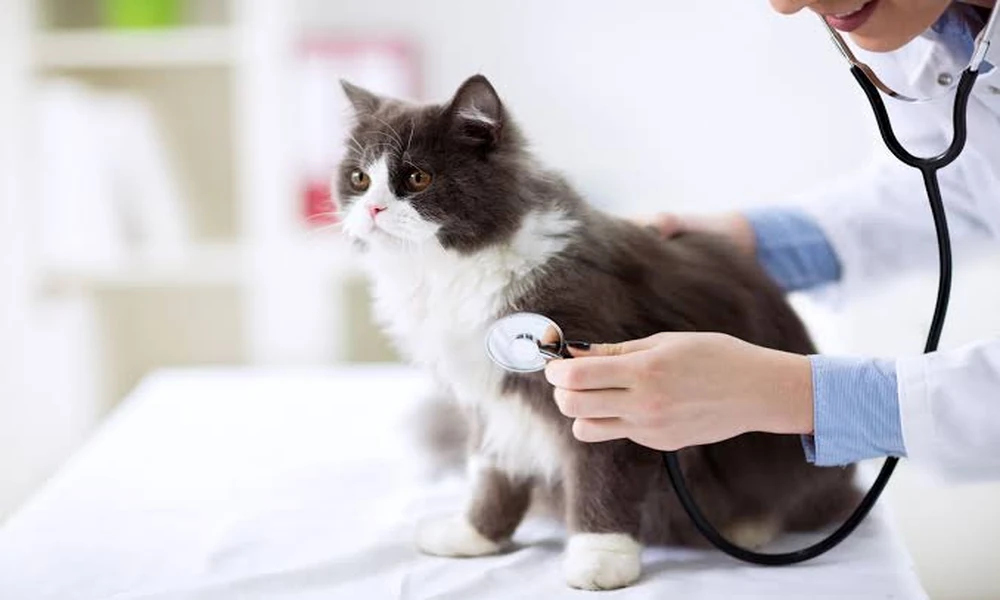
The physical exam helps narrow the next steps. A veterinarian listens to the lungs and heart, checks hydration, feels the abdomen, looks closely at the eyes, and evaluates the nervous system if there are tremors, weakness, seizures, or balance problems. Eye inflammation can push toxoplasmosis higher on the list. So can fever that does not have an obvious source, enlarged lymph nodes, or signs of pneumonia.
This stage matters because toxoplasmosis is not diagnosed in a vacuum. The same parasite can affect the lungs in one cat and the eyes or brain in another. A good general veterinarian is looking for the pattern, not just the label.
Lab tests and imaging help separate toxoplasmosis from other diseases
Most vets move next to baseline testing. That usually includes a complete blood count, chemistry panel, and urinalysis. These tests do not confirm toxoplasmosis on their own, but they show how sick the cat is and whether organs such as the liver or kidneys are involved. They also help reveal competing causes for the symptoms.
Blood testing for antibodies is often part of the process. Your vet may order serology to measure IgM and IgG antibodies to Toxoplasma gondii. A rising titer, a high IgM, or a pattern that fits active infection can support the diagnosis. The problem is that a positive result does not always mean the parasite is causing the current illness. Some cats were exposed in the past and are not sick from it now.
That is why test interpretation matters so much. The CDC clinical overview of toxoplasmosis notes that diagnosis often relies on a combination of clinical findings, imaging, and laboratory evidence rather than one stand alone result.
If your cat has respiratory signs, chest X rays may be recommended. If neurologic signs are present, your vet may discuss referral for advanced imaging or spinal fluid testing. If eye disease is severe, an ophthalmic exam may be added. In some cases, samples from affected tissues or fluids can be tested by PCR or cytology. A pulmonary case reviewed by Texas A&M’s Veterinary Medical Diagnostic Laboratory shows how imaging and tissue based testing can help confirm the disease when lung signs are prominent. See the pulmonary toxoplasmosis case study in a young cat.
Common diagnostic tools and what they actually tell your veterinarian
| Diagnostic step | What it helps show | Main limitation |
|---|---|---|
| History and physical exam | Risk factors, affected body systems, illness severity | Cannot confirm the parasite by itself |
| Bloodwork and urinalysis | Inflammation, organ stress, dehydration, competing illnesses | Findings are often nonspecific |
| Toxoplasma antibody testing | Exposure pattern and support for recent or active infection | Positive results may reflect past exposure only |
| Chest X rays or other imaging | Lung changes, organ involvement, alternative causes | Imaging patterns can overlap with other diseases |
| PCR, cytology, or tissue sampling | More direct evidence of the organism in affected areas | May require referral, sedation, or invasive sampling |
| Treatment response | Whether signs improve with anti protozoal therapy | Improvement alone is not perfect proof |
Cat toxoplasmosis diagnosis often depends on the full pattern
One of the most common misunderstandings is that a single positive blood test settles everything. It usually does not. Your vet is asking a more useful question. Do the symptoms, the risk factors, and the test results line up well enough to make toxoplasmosis the most likely explanation?
Sometimes the answer is yes, and treatment starts right away. Sometimes the answer is “possibly,” and your vet treats while still watching for another diagnosis. That approach is common in general veterinarian practice because waiting for perfect certainty can delay care in a cat that is already struggling.
Three steps you can take right away
1. Track the exact signs you are seeing. Write down when symptoms started, whether they are getting worse, and anything unusual such as raw food exposure, hunting, breathing changes, or eye discharge. That timeline helps your vet more than a vague “she’s just off.”
2. Bring your cat in before the symptoms stack up. Cats hide illness well. A day or two of not eating, labored breathing, weakness, or neurologic signs should not be watched at home. Early testing gives your veterinarian more options and often lowers the risk of a crisis visit later.
3. Follow through on the full diagnostic plan. If your vet recommends repeat titers, imaging, or referral, there is usually a reason. The first round of tests may point toward toxoplasmosis without fully proving it. Finishing the workup helps protect your cat from the wrong treatment and missed disease.
A careful veterinary investigation gives your cat the best chance
If you are facing this possibility, you are probably balancing worry, cost, and the fear of missing something serious. That is the reality of suspected toxoplasmosis. The good news is that a thoughtful general veterinarian does not guess blindly. They build the diagnosis step by step, using symptoms, risk, testing, and response to treatment to find the most likely answer and act on it.
If your cat is showing signs that could fit toxoplasmosis, schedule an exam with a general veterinarian as soon as you can. Prompt evaluation is the clearest next step.
