
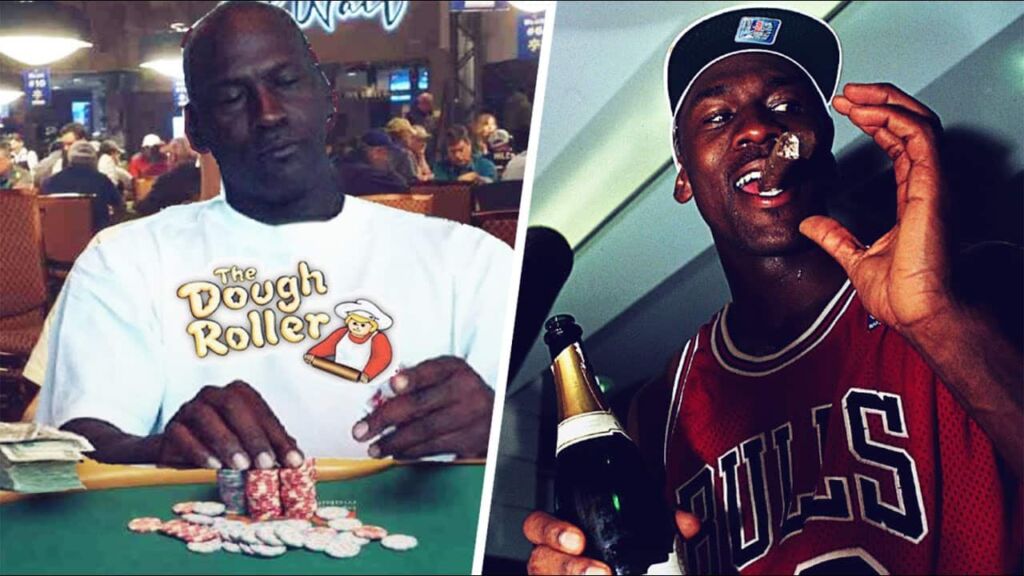
Michael Jordan gambling stories are a permanent fixture of his legendary career. While his high-stakes golf bets and casino visits are well-documented, his competitive nature is often cited as the root cause. Despite numerous rumors over the decades—including speculation about his first retirement—there has never been official evidence that his gambling impacted the integrity of NBA games or violated league rules beyond personal conduct.
Jordan himself has never fully denied the gambling – he’s acknowledged it while pushing back on characterizations of it as an addiction or crisis.
Key Documented Incidents
| Incident | Year | What Happened |
|---|---|---|
| Hilton Head golf debt | 1992 | Jordan lost (reportedly) $57,000 to businessman James “Slim” Bouler; Bouler later convicted of drug charges; Jordan testified the check was a loan |
| Richard Esquinas’ book | 1993 | San Diego businessman wrote *Michael & Me: Our Gambling Addiction… My Cry for Help* claiming Jordan owed him $1.25 million from golf betting |
| First retirement (October 1993) | 1993 | Jordan retired suddenly at 30, 18 months before he returned; no official connection to gambling was proven |
| NBA investigation | 1992-1993 | NBA investigated Jordan’s gambling; Commissioner Stern said no violations of league rules were found |
| Casino in Atlantic City | 1993 | Jordan was photographed in a casino the night before a playoff game vs the Knicks; generated significant coverage |
| *The Last Dance* admission | 2020 | Jordan acknowledged gambling heavily; said it was competitive instinct, not addiction |
The Golf Gambling Question
Golf gambling was central to most of the documented incidents. Jordan is a serious golfer with a reported handicap that has varied over the years, and high-stakes golf bets – thousands to tens of thousands per hole – have been a consistent part of his game.
Richard Esquinas’ 1993 book claimed Jordan lost $1.25 million to him over a series of golf matches and then negotiated the debt down to $300,000. Jordan’s response was to characterize the losses as much lower than claimed and to question Esquinas’ characterization of their relationship.
The dispute was never fully resolved in public.
The First Retirement: The Conspiracy Theory
Jordan’s sudden retirement in October 1993 – just months after the NBA investigation, weeks after his father’s murder – generated enormous speculation that he had been quietly pushed out by the league over gambling concerns.
The NBA has consistently denied this. David Stern said at the time there was no connection. Jordan himself has denied it.
What’s true:
- The timing was unusual
- Jordan’s father James Jordan was murdered in July 1993
- Jordan had just won his third consecutive championship
- He returned to basketball 18 months later
The conspiracy remains unproven but resurfaces reliably in basketball discussion, particularly after *The Last Dance* revisited this period.
What Jordan Has Actually Said
In *The Last Dance* documentary (2020), Jordan was notably candid:
*”I have a competitive nature. I’m not going to back down from anything that’s competitive.”*
He framed his gambling as an extension of the same competitive drive that made him the greatest player of his era – not as a problem requiring treatment or correction. He acknowledged the large bets but pushed back on characterizations of the amounts and context.
He also said: *”I don’t have a gambling problem. I have a competition problem.”* Whether that’s self-awareness or rationalization is genuinely debatable.
Impact on His Legacy
| Dimension | Assessment |
|---|---|
| On-court career | No verified impact; six championships, six Finals MVPs |
| NBA investigation | Cleared; no violations found |
| Public perception | Persistent narrative that humanizes him for some; concerns others |
| Business reputation | No apparent commercial impact; Jordan Brand exceeds $6B/year |
| Hall of Fame status | Not affected |
The gambling controversy is the most human story in Jordan’s legacy – a reminder that the greatest competitor in basketball history applied that same compulsive competitiveness to everything, including contexts where it cost him financially.
The Bottom Line
Michael Jordan’s gambling is documented, significant in scale, and genuinely interesting as a portrait of a competitive personality taken to extremes. What isn’t proven is any connection between gambling and his NBA career outcomes. Jordan won six championships, was cleared of any rule violations, and built a post-career business empire that suggests no meaningful consequences. The story endures because it complicates the perfect narrative – which is probably why it’s never fully gone away.
