
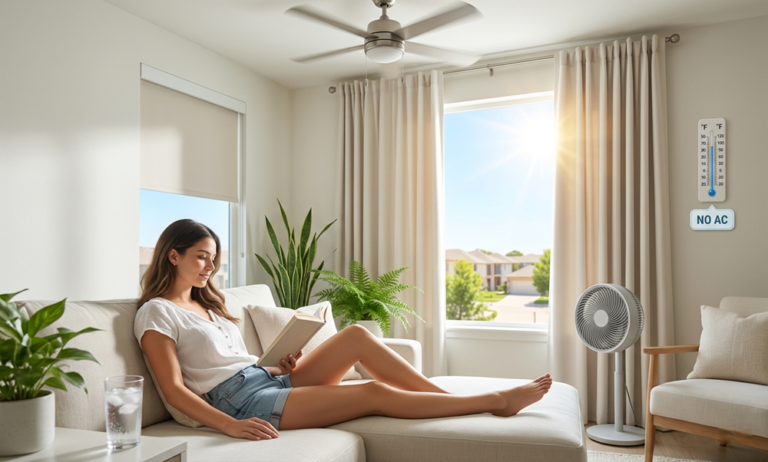
Dallas summers don’t mess around. When temperatures hit 105°F and the humidity follows, staying inside without air conditioning feels impossible — but it’s not. With the right strategy, you can drop your room’s temperature by 10–15 degrees without touching a thermostat.
These aren’t generic suggestions. These are techniques that actually work in Dallas specifically, where the heat is dry during the day but builds up in walls and rooftops like a slow oven.
Why Dallas Heat Is Different (And Why Normal Tips Fall Short)
Dallas gets dry heat during the day but retains radiant heat from concrete, asphalt, and rooftops well into the night. Your room doesn’t just absorb sunlight — it absorbs heat radiating off the city itself. That’s why your room can feel hotter at 9 PM than at noon.
How to Keep Your Room Cool Without AC in Dallas
Block Heat Before It Enters
This is the highest-impact step most people skip:
- Close blinds and curtains before 9 AM — Once sunlight hits glass, your room is a greenhouse. Blackout curtains on south and west-facing windows are worth every penny in Dallas.
- Apply window film — Reflective window film blocks up to 70% of solar heat. A $20 roll from a hardware store makes a measurable difference.
- Seal door gaps — Hot air seeps under doors. A simple draft stopper keeps cooler room air from escaping.
Create Cross-Ventilation Strategically
Dallas cools down after midnight. Use that window:
- Open windows on opposite sides of the room at night
- Place a box fan facing outward in one window — this pulls hot air out
- Let cooler outside air enter through the opposite window
- Close everything again before 8 AM
Use Fans the Right Way
Fans don’t cool air — they cool skin. Point them at yourself, not at the room.
- Ceiling fan direction matters: In summer, blades should spin counterclockwise (when viewed from below) to push air down.
- Frozen water bottle trick: Place a shallow pan of ice in front of a fan. It genuinely drops the immediate air temperature a few degrees.
- Tower fans on low at night circulate air without making noise that disrupts sleep.
Comparison: Cooling Methods for Dallas Rooms
| Method | Cost | Effectiveness | Best For |
|---|---|---|---|
| Blackout curtains | $30–60 | Very High | All-day use |
| Window film | $15–25 | High | South/west windows |
| Cross-ventilation | Free | High | Nighttime |
| Fan + ice bowl | Free | Medium | Immediate relief |
| Portable evaporative cooler | $80–150 | Medium-High | Dry heat days |
Lower Your Body Temperature, Not Just the Room
- Take a cool (not cold) shower before bed — cold showers cause your body to generate heat to warm back up
- Use moisture-wicking sheets instead of cotton
- Sleep with a damp towel nearby — evaporation cools as it dries
Pro Tips for Dallas Specifically
- Avoid cooking indoors between 11 AM – 6 PM — Ovens and stovetops add serious BTUs to a room. Use a slow cooker, instant pot, or eat cold foods during peak heat.
- Move to the lowest floor — Heat rises. A ground-floor room is genuinely cooler. If you’re in a two-story home, sleep downstairs in July and August.
- Check your attic insulation — Dallas homes with poor attic insulation essentially bake from above. Adding blown-in insulation pays back in comfort immediately.
Common Mistakes to Avoid
- Opening windows during the day when it’s hotter outside than inside — you’re just importing heat
- Running multiple appliances (TV, gaming consoles, desktop PCs) simultaneously — each generates significant heat
- Ignoring humidity on storm days — a portable dehumidifier helps even without AC when Dallas gets rare humid stretches
FAQs
Q: What’s the cheapest way to cool a room in Dallas without AC? A: Cross-ventilation at night combined with blackout curtains during the day — both are free or near-free.
Q: Do evaporative coolers work in Dallas? A: On dry days, yes. When Dallas gets humidity after storms, they’re less effective.
Q: How hot does it get at night in Dallas summer? A: Overnight lows often stay above 80°F in July and August, which is why night ventilation timing matters.
Conclusion
You don’t need to suffer through Dallas summers without AC if you’re strategic. Start with blackout curtains and night ventilation — those two steps alone make a significant difference. Add a window film and a well-positioned fan, and your room becomes livable. The key is managing heat before it enters, not trying to remove it after it’s already there.